
Multimodal creation
Combine as many as 20 reference assets, including information parsed from documents and webpages.
Generate a Wan 3.0 clipAutomatic aspect ratio
The model or reference image determines the frame.
Your video will appear here
480pCreate with Wan 3.0 Video on HHGen for motion close-ups, environment shots and tracking clips. Describe the shot and add references in a mode that supports them.
Combine as many as 20 reference assets, including information parsed from documents and webpages.
Generate a Wan 3.0 clipGive a scene more time to develop and tell a fuller story.
Generate a Wan 3.0 clipKeep subjects and visual details coherent throughout a shot for production workflows.
Generate a Wan 3.0 clipExplore realistic textures, scene atmosphere and accompanying sound.
Generate a Wan 3.0 clipUse instructions to guide changes to a reference video with greater control.
Generate a Wan 3.0 clipUse Text-to-Video (T2V) for a new scene or Image-to-Video (I2V) to start from a composed reference. Describe what moves, what stays fixed and where the camera goes. Fluid dynamics simulation can be a visual brief for splashes or smoke, but generated video is not a validated physical simulation.
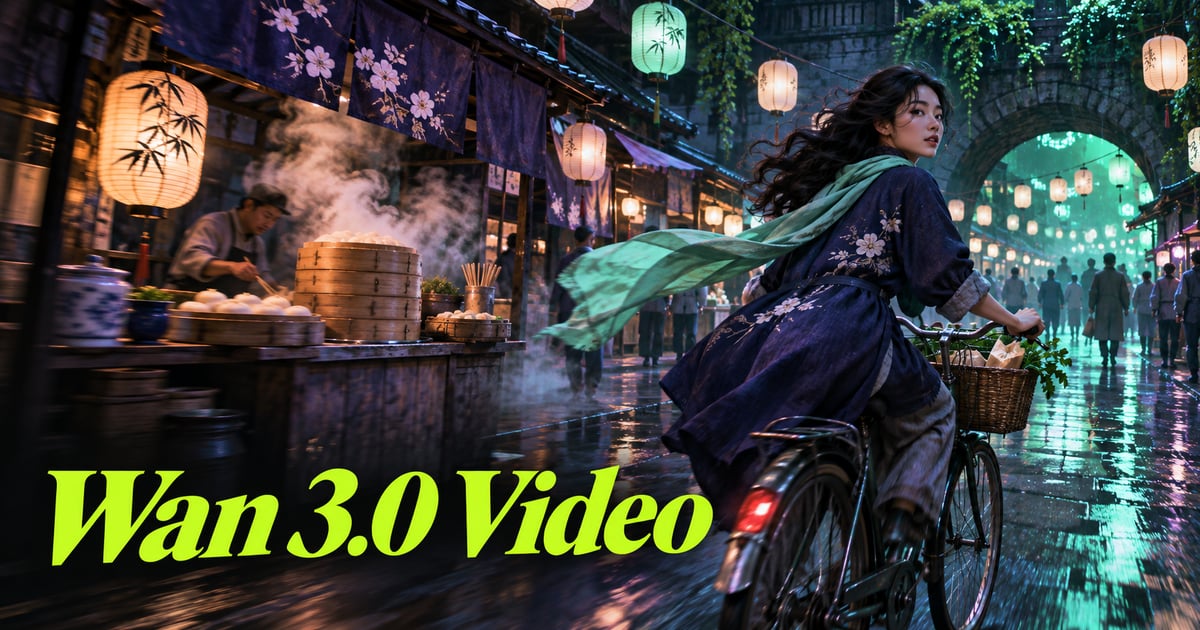

Current site configuration is shown here. Check the generator for input combinations and the final credit quote.
Illustrated workflow
Use Text-to-Video (T2V) for a new scene or Image-to-Video (I2V) to start from a composed reference. Describe what moves, what stays fixed and where the camera goes. Fluid dynamics simulation can be a visual brief for splashes or smoke, but generated video is not a validated physical simulation.
Try this model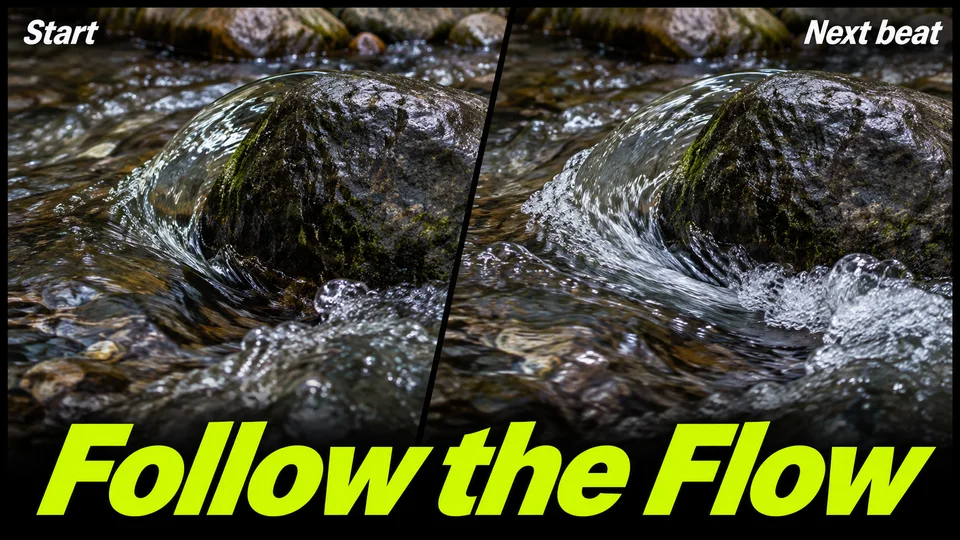
| Model | Typical task | Input modes | Resolution | Duration |
|---|---|---|---|---|
Current modelWan 3.0 Video | Show the flow of water | Text-to-Video / Image-to-Video / Reference-to-Video / Video-to-Video | 480p / 720p / 1080p | 2 sec / 3 sec / 4 sec / 5 sec / 6 sec / 7 sec / 8 sec / 9 sec / 10 sec / 11 sec / 12 sec / 13 sec / 14 sec / 15 sec / 16 sec / 17 sec / 18 sec / 19 sec / 20 sec / 21 sec / 22 sec / 23 sec / 24 sec / 25 sec / 26 sec / 27 sec / 28 sec / 29 sec / 30 sec / -1 sec |
| Compare motion drafts | Text-to-Video / Image-to-Video / Reference-to-Video / Video-to-Video | 480p / 720p / 1080p | 2 sec / 3 sec / 4 sec / 5 sec / 6 sec / 7 sec / 8 sec / 9 sec / 10 sec / 11 sec / 12 sec / 13 sec / 14 sec / 15 sec / 16 sec / 17 sec / 18 sec / 19 sec / 20 sec / 21 sec / 22 sec / 23 sec / 24 sec / 25 sec / 26 sec / 27 sec / 28 sec / 29 sec / 30 sec / -1 sec |
Open this page’s generator and check that Wan 3.0 Video is selected.
Choose a supported input mode. If it uses a reference, add a clear source and decide what to keep.
Write the result you want, review the settings and credit estimate, then generate.
Wan 3.0 Video Online Video Generator FAQ
Image
JPG, JPEG, PNG, WEBP, BMP · 20MB


